ByJohn A
How Do You Find The Best Tupelo Honey Without Getting Fooled By Fakes?
The best tupelo honey comes from a seller who can identify the beekeeper, the harvest area, the floral claim, and the batch details. Real Tupelo honey is a prized varietal associated with Tupelo blooms in parts of Florida and Georgia, but no kitchen test, color shade, price tag, or “raw” label proves authenticity on its own. Knowing what to ask, what to read, and what to ignore makes the difference between a confident purchase and a costly mistake.
How to Avoid Fake Tupelo Honey
Start with the seller before reading anything else into a listing. Buy from a named beekeeper, apiary, or established honey company that provides direct sourcing information: a specific Tupelo floral claim, a named Florida or Georgia harvest region, and lot or batch details. Read the full product description and ingredient list rather than only the front-label claim.
Two things to keep in mind throughout the process:
- Treat sensory cues and price as screening signals only, never as proof
- Skip viral water, flame, thumb, bread, ant, or crystallization “tests”
For high-value, wholesale, gift, or resale purchases, ask about independent testing or arrange laboratory analysis.
See also: What To Look For When Choosing A Just Because Flower Shop?
What Counts as Real Tupelo Honey
Tupelo honey is a varietal honey made predominantly from nectar gathered during the Tupelo bloom, most commonly associated with White Ogeechee Tupelo (Nyssa ogeche) and the river-swamp ecosystems of the southeastern United States. The Apalachicola River Basin and nearby Florida Panhandle areas are strongly associated with Tupelo production, and southern Georgia river and swamp regions are also identified by several established sellers as credible sourcing areas.
Real Tupelo honey rarely reaches botanical 100% purity, because bees forage across natural landscapes with multiple flowering plants. A credible seller should explain if “Tupelo” refers to a predominantly Tupelo varietal honey, a tested floral-source honey, or a blend. Jars labelled only “Florida honey,” “Southern honey,” or “wildflower honey” differ fundamentally from a specifically sourced Tupelo honey.
Start With The Producer
The jar tells you what a seller wants you to see. The producer tells you what actually happened between the hive and the jar.
Why Direct Traceability Matters
Traceability is the single most useful filter for an online buyer. A seller with direct sourcing information creates accountability if the product is mislabelled or different from its description, and it allows buyers to ask where the honey was harvested and how the varietal claim is verified. Broad claims such as “premium,” “artisan,” “wild,” or “gourmet” carry no comparable weight.
Buy From a Traceable Beekeeper or Brand
Look for sellers who meet a minimum standard of transparency:
- Full producer name, apiary or farm name, business address, and a working contact
- Description of their own hives, partner beekeepers, or extraction and sourcing relationships
- Regular Tupelo honey availability during a documented seasonal harvest
- Ability to answer basic sourcing questions without falling back on marketing language
When buying through a marketplace, check if the listing is fulfilled directly by the producer, an authorised retailer, or an unrelated third-party seller.
Verify the Tupelo Harvest Location
Geographic specificity is the clearest dividing line between a credible Tupelo listing and a vague one. Named places carry accountability; broad regional terms carry almost none.
Stronger Geographic Signals
Geographic specificity separates credible listings from vague ones. Strong signals include:
- Named river basin, swamp, county, or town rather than a broad state reference
- Apalachicola River Basin or Florida Panhandle Tupelo habitat
- Wewahitchka or another clearly identified Tupelo-producing town
- Named southern Georgia river or swamp region with a credible Tupelo source
- Producer explanation of where hives are placed during the spring Tupelo bloom
Weak or Vague Geographic Signals
Treat with caution any listing that says only “Made in the USA,” “Southern honey,” “Florida style,” “From the South,” “local honey” without an actual location, or “Imported Tupelo honey” without explanation of floral source. A Florida or Georgia address alone does not carry proof of Tupelo floral origin.
Read the Label Like a Buyer
Front-label claims are the easiest part of a jar to design and the least reliable part to trust. The ingredient list, lot details, and producer information on the back tell a more complete story.
What a Strong Listing or Label Should Show
Well-described Tupelo honey products carry:
- Clear product identity such as “Tupelo Honey,” “Pure Tupelo Honey,” or a carefully explained varietal claim
- The producer or packer name and contact information
- Net weight and country-of-origin information where required
- Complete ingredient statement showing honey rather than added syrups or flavorings
- Lot, batch, harvest year, or bottling date where the seller provides it
- Processing information like raw, minimally processed, filtered, or heated
- Written explanation if the product is a blend rather than a predominantly Tupelo varietal honey
Phrases That Need Follow-Up
Some wording on labels warrants a closer look: “Tupelo blend,” “Tupelo-style,” “Tupelo flavor,” “Made with Tupelo honey,” “Raw honey” with no source information, or “Pure” without a producer, place, or testing explanation.
Know the Difference Between Pure, Varietal, and Blend Claims
Tupelo honey claims vary considerably in what they actually mean, and a seller’s exact wording shapes what you are actually buying. The table below maps common label claims to what they may mean and what to ask.
| Claim on the jar | What it may mean | What to ask before buying |
| Pure Tupelo honey | Seller represents this as a Tupelo varietal product | What floral-origin standard does the seller use, and where was the batch harvested? |
| Predominantly Tupelo | Honey comes mainly from Tupelo bloom, with some natural mixed forage possible | Is there a pollen test, harvest region, or batch record? |
| Raw Tupelo honey | Describes handling, not proof of floral source | Who harvested it, where, and how is the Tupelo claim supported? |
| Tupelo blend | Contains some Tupelo honey or uses Tupelo as a marketing descriptor | What percentage is Tupelo, and what are the other honeys? |
| Florida or Georgia honey | Broad geographic claim | Is it from a named Tupelo bloom area and sold specifically as Tupelo honey? |
In natural honey production, floral-origin claims are assessed through a combination of source documentation, sensory evaluation, physicochemical analysis, and microscopic examination.
Use Color, Taste, and Texture as Clues Only
Tupelo honey is typically light golden or pale amber, with a mild, buttery, floral or vanilla-like aroma and a smooth, silky texture. It is often noted for slow crystallization compared with many common honey varieties. These are useful descriptors for knowing what to expect, but none of them prove authenticity.
Color varies with floral mix, storage, lighting, and filtering. Flavor judgments are subjective, and texture changes with temperature and moisture content. Slow crystallization relates to sugar composition and storage conditions, and carries no bearing on the exact floral source. Use sensory expectations to decide what suits your preference rather than as a fraud-detection method.
Understand Crystallization Without Falling for a Myth
Tupelo honey is often valued for staying liquid longer than many other honey types, which is related to its glucose-to-fructose balance. That said, crystallization is a natural physical process affected by temperature, seed crystals, water content, filtration, and handling.
A jar that crystallises carries no automatic mark of fraud, and a jar that stays liquid carries no automatic mark of authenticity. “Never crystallises” is an absolute sales claim and falls short of replacing traceability or testing evidence. Rejecting a producer solely because texture shifts slightly between harvests or seasons is premature.
Watch for Pricing and Marketplace Red Flags
Some warning signs are easy to overlook when a listing looks polished. Price anomalies and seller identity gaps are the two most common areas where buyers get caught.
Price Red Flags
Pricing outliers in either direction deserve scrutiny. Be cautious when:
- The price is dramatically below comparable Tupelo honey from traceable producers
- Deep discounts come with no explanation of closeout status, jar condition, or product type
- Large volumes are offered at commodity-honey pricing despite a rare-varietal claim
Price alone proves nothing about fraud, but genuine seasonal specialty honey typically carries higher production, handling, and scarcity costs.
Seller and Listing Red Flags
- No named producer, business address, phone number, or accessible customer support
- Generic product photos used across unrelated listings
- Conflicting origin descriptions or copied listing text
- There are no ingredients, lot information, or meaningful product details
- Claims that the honey cures disease or replaces medical treatment
- Sellers who decline simple questions about source, harvest, or refund policy
Skip Viral Home Tests
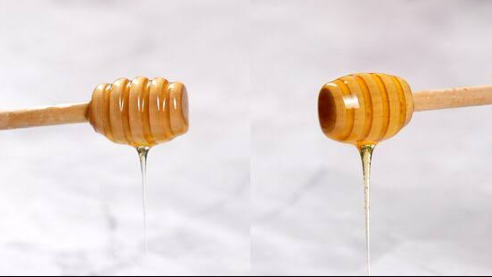
Home tests that circulate online (the water test, thumb test, flame test, bread test, ant test, refrigerator test, and the drip-string test) provide no reliable indication of honey quality or Tupelo floral origin.
Honey naturally varies in moisture, sugars, viscosity, filtering, temperature response, and crystallization behaviour. Some adulterated products pass simple home tests, while authentic honey can fail them. These tests do not have the ability to establish a Tupelo floral source or detect sophisticated adulteration. Treat them as informal observations rather than purchase decisions.
What Testing Can Verify
For high-stakes purchases, laboratory testing offers stronger evidence than any label claim. Pollen analysis, known as melissopalynology, examines pollen in honey to help assess floral and geographic origin and can support a Tupelo varietal claim. Physicochemical testing measures characteristics such as sugar profile, moisture, and fructose-to-glucose ratio to assess consistency with the declared variety. Carbon-isotope ratio analysis can help detect certain added sugar syrups, while NMR and other analytical techniques compare samples against authenticity databases.
There is no single consumer-facing claim such as “lab tested” that is sufficient on its own. Ask what was tested, by whom, when, and for which specific lot.
Smart Buying Process for the Best Tupelo Honey
Following a consistent order when evaluating listings reduces the chance of overlooking a red flag or paying a premium for a poorly sourced product. The process breaks into two phases: finding and vetting the seller before buying, then handling the order once it arrives.
Before placing an order:
- Search for producers tied to named Florida Panhandle or southern Georgia Tupelo regions
- Shortlist sellers with complete company identity, direct contact details, and detailed product pages
- Read the listing to determine if it is a Tupelo varietal honey or a blend
- Compare origin details, lot information, handling description, price per ounce, delivery cost, and refund policy
- Contact the seller with one or two sourcing questions if the page is vague
- Order one small jar first rather than immediately committing to a large quantity
Once the order arrives, the work continues. Inspect the delivered jar for seller and label match, intact seal, lot code, and shipping damage before opening it. Keep the label, receipt, product-page screenshot, and any seller correspondence for premium or gift purchases.FAQs
What is the best way to test if Tupelo honey is real?
Source verification is more reliable than any home test. Buy from a named producer who identifies the harvest region and lot details. For high-value purchases, pollen analysis provides stronger evidence than visual or taste assessment.
Why is Tupelo honey so expensive compared to regular honey?
Tupelo honey comes from a short seasonal bloom in a limited region. Beekeepers must position hives in river swamps and harvest at a precise moment. Limited geography and annual supply keep genuine Tupelo priced above standard commercial honey.
Does real Tupelo honey ever go bad?
Honey stored in a sealed container at stable room temperature has an extremely long shelf life, and Tupelo honey follows the same principle. Fermented smell or bubbling indicates high moisture content, a quality concern regardless of floral source.
Conclusion
Finding the best tupelo honey comes down to producer transparency, geographic specificity, and honest label claims. Sensory traits and price are useful starting points, but a named beekeeper, a credible harvest region, and traceable batch details provide far more confidence than any home test or front-label description.
Smiley Honey has built its reputation on raw Tupelo honey sourced from beekeepers who work genuine Tupelo river habitat in Florida and Georgia. Their honey is sold raw and unfiltered, with sourcing information that buyers can follow from producer to jar. Smiley Honey also carries a range of other raw varietal honeys for buyers who want to explore beyond Tupelo. For buyers who take the floral source seriously, traceable raw honey from a named producer is the standard worth holding to.
Read More: Hive Honey vs. Store-Bought Honey: Can You Taste the Difference